 MaxPro Medical
MaxPro Medical
MaxPro Medical
A low number on your fingertip can look alarming, especially when you feel normal. But a pulse oximeter estimates oxygen saturation; it does not measure it directly. A cool hand, movement, nail polish, poor circulation, or a loose sensor can affect the result. The U.S. Food and Drug Administration warns that pulse oximeters have limitations and may be inaccurate in some circumstances. Feeling fine is useful information, but it cannot confirm that a reading is correct.
In a 2020 New England Journal of Medicine study, physician-researcher Dr. Michael Sjoding and colleagues found that hidden low oxygen levels were more common among Black patients than White patients with similar pulse-oximeter readings. The researchers reported, “Black patients had nearly three times the frequency of occult hypoxemia.” This finding is a reason to interpret readings carefully, not a way to diagnose yourself. One number can mislead. So can a reassuring number.
If you are searching “why is my pulse oximeter reading low but i feel fine,” the answer may involve technique, device limitations, or a real health change. Try warming your hand, sitting still, and waiting for a steady reading; then check another finger. Make a note of the number and any symptoms. Repeated low readings deserve medical advice, especially if you feel short of breath, confused, faint, or unusually weak. Follow local clinical guidance, since appropriate thresholds can depend on your health and circumstances. A small but important caveat: home devices are helpful, not infallible.
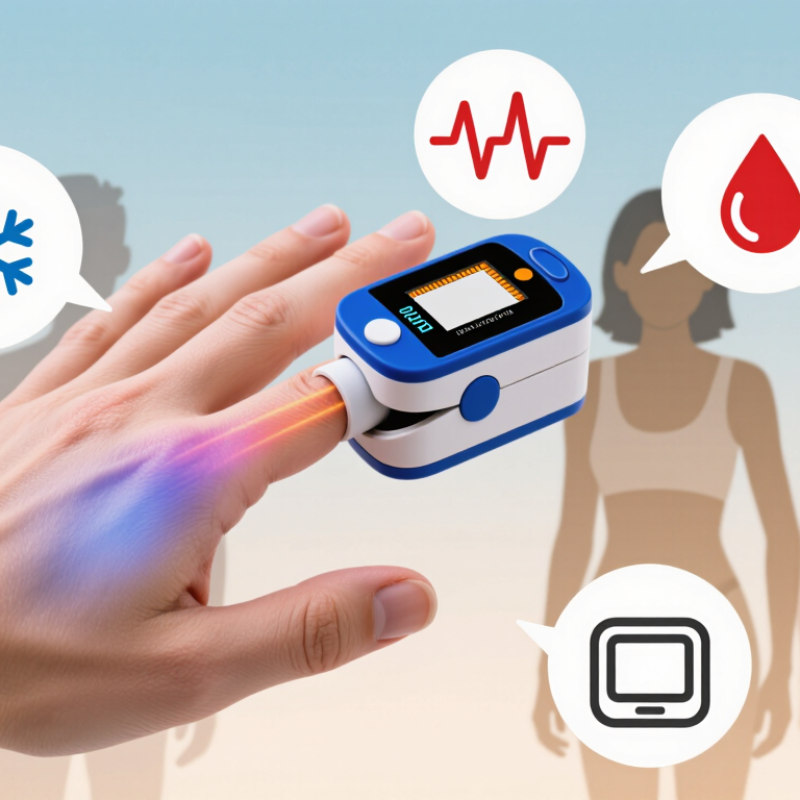
A pulse oximeter estimates the percentage of hemoglobin in your blood carrying oxygen. It shines light through a fingertip and reads how that light is absorbed. The result is called oxygen saturation, or SpO₂. It is an estimate, not a direct measurement of oxygen throughout your body.
It does not show why a reading is low, how well your lungs are working, or how much oxygen reaches every tissue. A person may feel normal despite a low number, especially if the change is mild or gradual. Yet feeling fine does not always rule out a problem. The number can also be wrong. Cold fingers, movement, poor circulation, nail polish, and device limitations may affect the signal. Skin pigmentation can also affect accuracy in some devices, sometimes causing oxygen levels to read higher than they are. Small details matter. Warm your hand, sit still, and place the sensor as directed. Wait for a steady result, then repeat it on another finger. A single odd reading is worth checking, not ignoring. If low readings persist, contact a health professional; seek urgent help for severe breathlessness, chest pain, confusion, or bluish lips. A repeated reading near or below 90% needs prompt medical advice, unless your clinician has given you a different target.
| Tip | What the Reading Measures | Why It May Look Low | What to Do |
|---|---|---|---|
| 1. Understand the number | A pulse oximeter estimates the percentage of hemoglobin in arterial blood carrying oxygen, shown as SpO₂. It does not directly measure oxygen in every part of the body or explain why a reading is low. | A person may feel well despite a low reading, particularly early in an illness or when a change develops gradually. Feeling fine does not confirm that the reading is harmless. | Compare the result with your usual level and any range provided by your healthcare professional. Interpret the number alongside symptoms and medical history. |
| 2. Check your measurement technique | The sensor estimates oxygen saturation using light passing through tissue, usually at a fingertip. Movement or a weak signal can affect the estimate. | Cold hands, poor circulation, motion, or a sensor that is not positioned securely can produce an unreliable result. | Warm your hand, sit still, remove nail polish or artificial nails if possible, and place the device as directed. Wait for a stable reading and repeat on another finger. |
| 3. Consider device limitations | A pulse oximeter provides an estimate, not a direct laboratory measurement. Accuracy can vary by device and conditions. | Some devices may be less accurate with poor circulation, skin temperature changes, skin pigmentation, tobacco use, or other factors. Consumer devices may not be evaluated for medical decision-making. | Check the device instructions and intended use. Do not rely on one result alone or use a consumer reading to rule out a health problem. |
| 4. Know what counts as low for you | For many healthy people at sea level, a typical SpO₂ reading is about 95% to 100%, but altitude, health conditions, and an individual care plan can change what is expected. | A reading below your normal range may matter even if you have no obvious symptoms. A persistently low result deserves attention rather than repeated checking alone. | Repeat the measurement correctly. If readings remain lower than your usual level, contact a healthcare professional for advice, especially if you have heart or lung disease. |
| 5. Respond to the whole picture | SpO₂ is one piece of information and cannot assess breathing effort, circulation, or overall illness by itself. | Serious problems can occur with few early symptoms. Conversely, a single unexpectedly low reading can result from measurement error. | Seek urgent medical help for severe shortness of breath, bluish lips or face, chest pain, confusion, or fainting. A repeated reading below 90% generally warrants urgent medical assessment; follow any personalized instructions you have received. |
| Important: This table is general information, not a diagnosis. Pulse oximeter readings can be inaccurate. Follow your clinician’s advice and do not delay urgent care because you feel fine or because a device shows a reassuring number. | |||
It estimates the percentage of blood hemoglobin carrying oxygen. This is called SpO₂. It does not measure oxygen in every body tissue.
Yes. Cold fingers, movement, poor circulation, nail polish, and device limitations can affect the result. Skin tone may also affect accuracy. Small details matter.
Warm your hand, sit still, and place your finger correctly in the sensor. Remove nail polish if practical. Wait for a steady result, then try another finger. I sometimes rush this step. Not ideal.
Feeling normal does not always rule out a problem. Repeat the reading carefully, and contact a health professional if low readings persist.
A repeated reading near or below 90% generally needs prompt medical advice. Follow a different target only if your clinician has set one.
Contact a healthcare professional promptly, especially with lung or heart disease, an infection, or pregnancy. Your usual oxygen level matters, too.
Seek urgent help for severe breathlessness, chest pain, confusion, fainting, or bluish lips. Do not wait for another reading.
No. It is evidence, not a diagnosis. Readings can vary between devices, and an oximeter cannot explain why a result is low.
A low pulse oximeter reading does not always mean that your oxygen level is dangerously low, especially if you feel well. The device estimates blood oxygen saturation and pulse rate, but results can be affected by a poor sensor position, movement, cold fingers, nail coverings, weak circulation, or an improperly fitted device. If you wonder, “why is my pulse oximeter reading low but i feel fine,” start by checking the batteries, cleaning the sensor, warming your hand, sitting still, and waiting for a steady number. Try another finger and repeat the reading after a few minutes.
Keep in mind that home readings can vary, and one unexpected result may not reflect your true condition. However, a persistently low reading, a noticeable drop from your usual level, or symptoms such as shortness of breath, chest discomfort, confusion, bluish lips, or unusual weakness should be taken seriously. Contact a healthcare professional for guidance, and seek urgent medical attention when low readings occur with severe or worsening symptoms.
