MaxPro Medical
Choosing where to place a pulse oximeter for best results sounds simple, but small details can change the reading. A cold fingertip, dark nail polish, hand movement, or poor circulation may produce an unexpectedly low number. This guide examines five practical locations: the fingertip, earlobe, toe, forehead, and specialized medical sensor sites. Not every location suits every device. Most home oximeters are designed for fingers, not ears or foreheads.
Emergency physician and airway specialist Dr. Richard Levitan emphasizes, “A pulse oximeter is a vital sign, not the whole patient.” His point matters. Oxygen saturation should be interpreted with breathing effort, skin color, chest discomfort, alertness, and personal medical history. One number cannot explain everything.
A warm, relaxed finger often gives the clearest home reading. Still, the other sites may help when fingers are cold, injured, or poorly perfused. Earlobe readings can be useful with compatible equipment. Toe measurements may help, but movement can interfere. Forehead sensors usually require clinical devices and correct placement.
Wait quietly.
For dependable results, remove nail polish when possible, rest your hand below heart level, and keep still for several seconds. Compare readings from different sites only when the device supports them. I should add one limitation: evidence and device accuracy vary, especially outside clinical settings. A reading that conflicts with severe breathlessness, confusion, or blue lips deserves urgent medical attention, regardless of the displayed number.
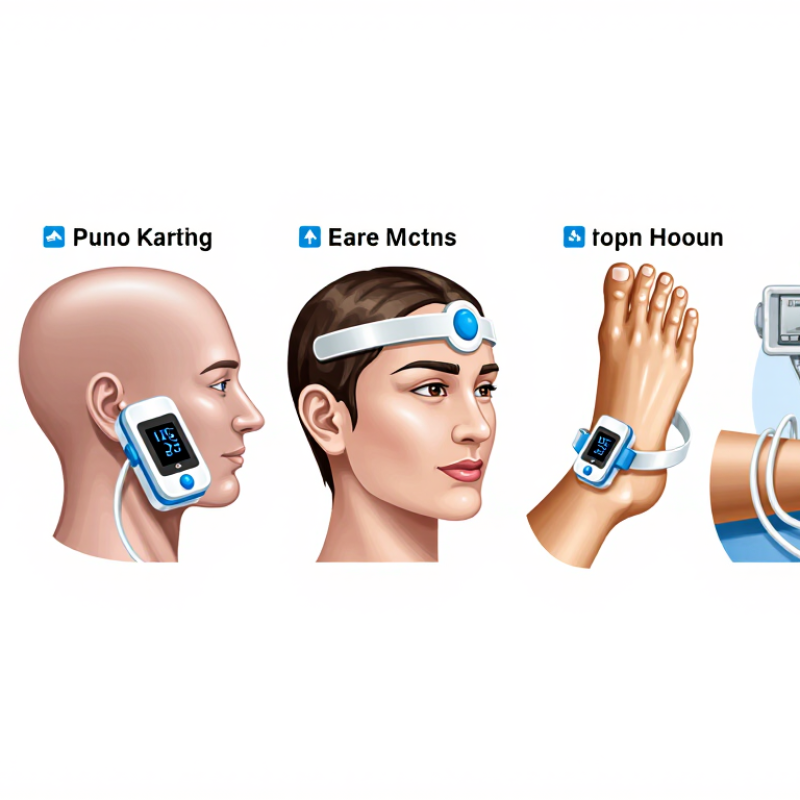
A pulse oximeter estimates blood oxygen saturation and pulse rate through light. One light wavelength passes through tissue more strongly than another. The sensor compares these changes with each heartbeat. Placement matters because blood flow, movement, temperature, and skin conditions can disturb the signal.
The index finger is often the most practical choice. The middle finger can work equally well. The ring finger is another useful option when circulation is normal.
For some devices, the earlobe provides a steady reading, especially when fingers are cold. A toe may also work, but only if the device instructions allow it. Different sensors support different body sites.
Keep the hand still and relaxed. Warm cold fingers before measuring. Remove dark nail polish when possible. Sit quietly for about a minute, then wait for the numbers to stop changing. Bright light, shaking, loose placement, or poor circulation can produce unreliable results. A low reading should be checked again on another finger, rather than accepted immediately. No placement is perfect. I once assumed a quickly displayed number was accurate, but movement had clearly affected it. If readings remain unusual or symptoms appear, seek qualified medical advice.
For most home checks, the fingertip is the most practical placement. The index or middle finger usually works well. Place the device over the finger and keep your hand still. Your hand should rest near heart level, not hang beside your body. A steady position helps reduce changing readings caused by movement.
Cold fingers can reduce blood flow and produce an unexpectedly low result. Warm your hand naturally before measuring, and remove dark nail polish if possible. Avoid checking immediately after exercise, when breathing and circulation are still changing. Wait quietly for several seconds until the numbers become stable. One reading is not always enough. A result can look precise while still being affected by poor circulation, skin temperature, or sensor fit.
Tips: Keep the finger clean and relaxed. Do not squeeze the device. Try the other hand if the reading seems unusual, then compare the results. Write down the number, pulse rate, time, and any symptoms. Never rely on the display alone when someone has severe breathlessness, chest pain, confusion, or bluish lips. Seek urgent medical help in those situations. Follow the device instructions, because sensor designs differ. Personal testing is useful, but it has limits.
Top 5 Places to Put a Pulse Oximeter for Best Results?
Earlobe placement is a useful alternative when fingers are unsuitable. A cold hand, poor circulation, nail coverings, or tremors can disturb readings. The earlobe often has steadier blood flow and feels easier to keep still. However, it is not automatically better. The U.S. FDA states that pulse oximeter accuracy can be affected by circulation, temperature, skin characteristics, and movement. Its guidance commonly targets an accuracy range of about ±3 percentage points for readings between 70% and 100% oxygen saturation under testing conditions. Real life is less controlled.
Tips: Warm the earlobe gently first. Remove earrings. Clean and dry the skin. Place the sensor securely on the fleshy lower edge, not the thin upper rim. Sit quietly for at least one minute, then wait for the number to stabilize. Take two readings, about 30 seconds apart. Record the pulse rate too. British Thoracic Society guidance emphasizes interpreting oxygen readings alongside symptoms and clinical context, not in isolation.
An earlobe reading may be unreliable after ear injury, significant swelling, or very poor circulation. I would also question a sudden number that conflicts with the person’s appearance or breathing. Try another approved site and check the device position. A persistent low reading, blue lips, severe breathlessness, confusion, or chest pain needs urgent medical assessment. A number can be wrong. Symptoms still matter.
References: U.S. FDA, Pulse Oximeters Guidance, 2013; U.S. FDA, Pulse Oximeter Safety Communication, 2021; British Thoracic Society, Guideline for Oxygen Use in Adults, 2017.
Practical suitability for a reusable pulse oximeter sensor. Finger placement is the usual first choice; the earlobe is a useful alternative when fingers are cold, injured, or unsuitable.
How to use this guide: Keep the selected site warm and still, remove nail coverings when using a finger, and wait for a stable reading. If the result does not match the person’s symptoms, repeat the measurement at another suitable site and seek medical advice when needed. This ranking describes practical use and is not a laboratory accuracy score.
Toe placement can be practical when fingers are cold, injured, occupied, or covered by monitoring equipment. Place the sensor on a clean, warm toe, with the light path aligned across the nail. Keep the foot still for several seconds. A stable number matters more than a quickly displayed number.
The World Health Organization’s Pulse Oximetry Training Manual identifies oxygen saturation below 90% as severe hypoxemia requiring urgent attention. However, a toe reading can fall because of cold skin, weak circulation, movement, or nail polish. It is not automatically better than a finger reading. People with peripheral vascular disease, diabetes, or swollen feet may receive a weak signal. That detail is easy to overlook.
Accuracy also deserves caution. A 2020 New England Journal of Medicine study found occult hypoxemia in 12% of measurements among Black patients, compared with 3.6% among White patients, despite readings in the usual acceptable range. The FDA has similarly warned that skin pigmentation, poor circulation, and device limitations can affect readings. These findings do not make toe placement useless. They make context essential. Compare both feet only if advised, repeat an unexpected result, and consider breathing difficulty, blue lips, confusion, or chest pain. The number may be wrong. Your symptoms still matter.
| Rank | Placement | When It May Be Useful | How to Improve the Reading | Common Limitations | Practical Rating |
|---|---|---|---|---|---|
| 1 | Index or middle finger | Usually the first choice for a standard fingertip pulse oximeter because the finger is easy to position and commonly provides a strong pulse signal. | Warm the hand, keep it relaxed and still, place the sensor fully over the fingertip, and wait until the pulse and oxygen readings stabilize. | Cold hands, movement, poor circulation, artificial nails, dark nail products, or an improperly positioned sensor may affect results. | Best general option |
| 2 | Big toe or second toe | May be practical when finger readings are difficult, when the hands are cold or occupied, or when a foot-based measurement is more comfortable. | Use only if the sensor fits securely and its instructions allow toe placement. Keep the foot still, warm, clean, and free from dark nail polish. | A standard fingertip device may not be validated for toes. Foot circulation, pressure from footwear, swelling, and cooler skin can produce a weak or delayed signal. | Useful alternative |
| 3 | Earlobe | Can be considered when finger or toe perfusion is poor, but it generally requires an ear-specific sensor rather than a standard fingertip clip. | Keep the person still and attach the sensor securely to the soft lower earlobe according to the device instructions. | Not compatible with many consumer fingertip oximeters. Earrings, cold skin, movement, and an unstable clip can interfere with the signal. | Device-dependent |
| 4 | Forehead | May be used when peripheral circulation is reduced or when the hands and feet cannot be accessed easily, but it requires a dedicated forehead sensor. | Apply the sensor to clean, dry skin and follow the manufacturer’s placement and stabilization instructions. | Sweat, motion, ambient light, hair, skin temperature, and incorrect sensor positioning may affect the measurement. | Clinical-style option |
| 5 | Wrist or hand with a dedicated sensor | May be appropriate for continuous monitoring when the device is specifically designed to measure from the wrist or hand. | Wear the sensor as directed, keep the arm supported, and minimize movement during each reading. | A conventional fingertip oximeter is not intended for the wrist or palm. Loose positioning, motion, and low blood flow can reduce reliability. | Specialized use |
When finger circulation is weak, a forehead sensor can offer a more reliable pulse oximeter reading. It may also help when fingers are injured, cold, swollen, or difficult to access. However, only use a sensor designed and approved for forehead placement. A standard fingertip device should not be moved to the forehead.
Clean and dry the skin first. Remove heavy makeup, sweat, and loose hair from the sensor area. Place the sensor flat, usually above the eyebrow or on the temple, according to its instructions.
Keep the person still, and avoid pressing tightly. Wait for a steady pulse signal before recording the oxygen level and heart rate. Cold skin, poor sensor contact, movement, and strong indoor light can still affect the result.
Forehead readings are useful, not flawless. A number may look convincing and still be wrong. Compare it with the person’s breathing, skin color, alertness, and symptoms.
If the reading changes sharply, repeat the measurement and check the sensor position. Ask a qualified healthcare professional for guidance when circulation is severely reduced or readings remain unexpectedly low. Seek urgent medical help for serious breathing difficulty, chest pain, confusion, or blue lips.
The index finger is practical for many devices. The middle or ring finger may also work. Keep your hand warm, relaxed, and still.
An earlobe can help when fingers are cold, trembling, or poorly circulated. Remove earrings and clean the lower, fleshy edge. It is not automatically better.
A toe may help when fingers are injured, covered, or very cold. Use it only if the device allows toe measurements. Keep the foot warm and still.
Sit quietly for about one minute. Warm cold skin gently and remove dark nail polish when possible. Wait until the number stops changing.
Movement, bright light, loose placement, cold skin, and weak circulation can disturb the signal. Swelling, nail coverings, and some skin characteristics may also affect readings.
Repeat the measurement on another approved site. Wait calmly and check the pulse rate too. A fast number is not always a good number.
No. Symptoms and the reading should be considered together. Breathing difficulty, blue lips, confusion, or chest pain need urgent medical assessment.
Not always. Research has found hidden low oxygen in some readings, including among people with darker skin. The device has limits, so unusual results deserve careful checking.
Under controlled testing, readings may differ by several percentage points. Real-life conditions are messier. I once trusted a quick number too soon.
Choosing where to place pulse oximeter for best results depends on the device, your circulation, and the condition of the measurement site. Fingertip placement is the standard option for home use because it is convenient and usually provides a stable reading when the hand is warm, relaxed, and still. If finger measurements are difficult because of injury, limited access, or poor circulation, the earlobe can offer a useful alternative. A toe may also be practical when the hands cannot be used, although the foot should be warm and free from pressure.
In clinical settings, forehead placement may be considered when circulation is reduced or access to the fingers and ears is limited. Regardless of the location, remove anything that could interfere with the sensor, remain still, and wait for the numbers to stabilize. If a reading seems unusual or does not match how you feel, repeat the measurement and seek professional guidance when appropriate.
